Sunday, December 13, 2009

Contest Winners!

I would like to say a huge thank you to everyone who participated in the seed giveaway contest, which was generously brought to us by Renee's Garden! I really appreciate all the tips, ideas, and encouragement from my fellow gardeners. I am truly thrilled to be starting this vegetable garden, and I will be sharing my successes and failures with it right here all season long next year!

So without further ado, our first winner of the Rainbow Kitchen Garden Collection is Miss Nessa!


And our second winner of the Basil Lover's Bonanza is Dee at Red Dirt Ramblings!


Congratulations to the winners, and I will contact you for your mailing address. Thanks again to everybody who commented and to Renee and Nellie at Renee's Garden!

Wednesday, December 9, 2009

Could it be?

It is!


It's my forced hyacinths beginning to do something!! Now, for those of you who are experienced at forcing bulbs, my excitement probably seems a little overdone, but this is my first attempt at forcing and I can't believe it might be working! I am a bit of a bulb skeptic; don't get me wrong, I like tulips, hyacinths, crocus and all those, but they're not topping my list when I think of favorite plants. And honestly I'm not a big fan of lilies (apologies to lily-lovers out there!).

However, if I actually get these hyacinths to bloom in bleak, miserable February, then a shift in my relationship with bulbs might be underway!

So here's my question--do I water them now? The soil is pretty dry to the touch, but I don't want to water them at the wrong time. Come on, bulb experts, help me out! It's only been about 4 weeks since I potted these, so what do I do now?


Like many others around the country, we were greeted by this landscape this morning. The snow is continuing to fall and we may have 8-10" total by the time it's all over. At least it's lovely for now!


Don't forget to enter the seed giveaway contest if you haven't done so already! The contest closes at 7pm CDT on Sunday Dec. 13th so there is still plenty of time!

Monday, December 7, 2009

Seed Giveaway Contest!


What is this random rectangle?


It's the new vegetable bed! Tech Support graciously constructed this beauty to my specifications, and now its soil, compost and topping of leaves (hidden under the snow) are mixing and hopefully making a rich base for next year's veggie crops. (I didn't fill the entire raised bed because I got worn out by hauling 40-lb. bags of topsoil and compost, so it's still a work in progress and yes I am lazy.)

Until now my edible gardening has consisted of containers, my herb garden, and a failed attempt at growing peppers in the spot where the rain garden now resides. It failed because that location is way to shady to grow any vegetables, especially bell peppers, but it was our first year in the house and I hadn't thoroughly evaluated the sun situation around the whole yard. Live and learn!

But for the past few years I've been watching how and when the sun's rays sweep across different parts of the garden and how long they stay there in the various seasons. Not surprisingly, the south side of the yard has the most light, and hence we literally squeezed this raised bed into this little patch of the yard. My containers of vegetables grew well on the south side of the house this past summer, and that was in a weird summer with relatively few sunny days, so I'm fairly confident I'll get adequate light here.

What does this have to do with a seed giveaway contest? I'm getting there. I'm already voraciously planning what will grow here next year and how I can maximize this bed, which measures 9x3. I have a trellis for the cucumbers and summer squash so as to get some plants growing upwards. (It's getting put in after the winter so it is not pictured.)

I am focusing on vegetables that I am confident my family will eat, so some decisions were pretty easy. For example, neither of my kids like peas or beans, so I am not growing either of these popular crops next year. Rather than try to heroically turn them into legume-lovers, I'm going to wait until the following year and maybe by then they'll be so excited to eat what they grow that I can slip some peas past them. Plus by then the soil will really need the nitrogen-fixing. But for this year I'm devoting the space to carrots and broccoli, which I know will get consumed and which I spend considerable money on at the grocery store.

Of course there will be bell peppers, but the chili peppers will be relegated to the containers where I can make sure they're in the absolute sunniest spot. I will probably only grow 2-3 tomato plants (gasp!). Why? Because they take up a lot of space, and in general I'm trying to follow the maxim of starting small. I don't want to bite off more than I can proverbially chew. Spinach, onions, Swiss chard and various lettuces will likely round out the menu, although some beets may make a random appearance as the outlier plant.

So, what does this have to do with a seed giveaway contest?? The folks at Renee's Garden sent me two lovely seed collections for two lucky readers, which you saw pictured above. One is the Rainbow Kitchen Garden Collection.

It contains Bright Lights Chard, Tricolor Bush Beans, Garden Candy Cherry Tomatoes, Jewel-Tone Sweet Peppers, and Monet's Mix Mesclun Lettuces.


The second is Basil Lover's Bonanza, which includes Scented Basil Trio, Italian Pesto Basil, Mrs. Burns' Lemon Basil, Salad Leaf Basil, and Green Windowbox Basil. Fabulous!

So here's how it works: leave me a comment with your best vegetable-growing tip, and I will draw two numbers on Sunday, December 13, to decide the winners! Your tip can be general advice about edible gardening, or it can be something specific to the plants I discussed. What should I know about growing and caring for those particular vegetables? What pests or diseases could really get them? Or what's the best variety out there that I should choose? I mentioned I'll only have a couple tomato plants, so what are the downright best heirloom varieties that you just couldn't live without? Or, is there a glaring omission in my choices? Is there something I must grow that I'm not thinking of? Let me hear it!

I will close the contest at 7pm CDT on the 13th, choose the numbers and announce the winners. Your comment will be assigned its number by its order, obviously. Only one comment per person will count for the contest, but you're welcome to keep telling me other ideas if you want!

So let's hear what you got! And you might win a nice present for yourself, just in time for Christmas!

(Many thanks to Nellie and Renee of Renee's Garden for our lovely prizes!)

Tuesday, December 1, 2009

The quest continues...

When I last left off with my quest for the right shrub, I had narrowed down the choices to sweetspire (Itea virginica) and pagoda dogwood (Cornus alternifolia). The particular front-runner was 'Golden Shadows' dogwood, whose yellow leaves would complement the purple and yellow color scheme of the newly planted border.


I received a number of encouraging comments with helpful recommendations! Ninebark (Physocarpus opulifolius) and oakleaf hydrangea (H. quercifolia) came up repeatedly, and these are both certainly great shrubs. I had considered ninebark at the start of the search, but I'm concerned this site is too shady. I believe ninebark can thrive in partial shade, but this location leans to the "full" side of "partial-to-full shade." Oakleaf hydrangea is on my radar screen, but I wanted to consider some other options before going with a hydrangea. (I think I'm suffering from hydrangea overkill. I see them everywhere, and I'm feeling a little burnt out on them. That's not to impugn anyone else's love for hydrangeas, but for me it's a maybe...)

Some of you fabulous people even offered me shrub seedlings right away! And I intend to take you up on those offers of St. John's Wort (Hypericum frondosum) and species pagoda dogwood (you know who you are!). In fact, while evaluating those shrubs' chances in this location, I realized how many other places I could put flowering shrubs in my yard. (Isn't garden blogging great?) But I decided there are indeed other places for those shrubs: a sunnier spot for the Hypericum and another currently bland, shady border for the dogwood. (Bland shady borders are not lacking around here, apparently!) Those are topics for another day, however, and I still felt something else was needed for my problematic place by the fence.

So I started to think of other types of woody plants that could perhaps grow here...trees! Why just have a shrub when I could have a tree? But it would have to be a diminutive one; I don't think an oak or hickory would be appropriate for this little spot. But as I mentioned before, this site is very sheltered from the wind, so I wondered if I could indulge my desire for a Japanese maple?

Japanese maples are notoriously fussy, but perhaps this oddball location could work. Fortunately, Chicagoland Gardening magazine ran a cover story on Japanese maples in September (along with my piece on native sedges, sorry for the blatant self-promotion!). Deb Terrill's article stated, "A taller tree canopy, large evergreens, buildings and fences can all offer some protection." Perfect! I have all of those things here! My soil may need some amending with leaf mold or mulch to bring the pH down little, but this is a real breakthrough! With the Siberian irises I planted near this spot, I could have a little Eastern/Eurasian vignette going here.

Then I started to think of the downsides to a Japanese maple: What if it died? I would be horrified to have a tree die. A little perennial here and there is one thing, but a beautiful (and expensive) tree?? And what about wintertime? How interesting would more bare branches really be? If it's a tree I want, how about an evergreen? There's no better winter interest than that!

And I am sorely lacking good evergreens. There are my hated yews that I keep complaining about, and two scraggly spruces near the edge of my driveway that aren't aging gracefully. But what about this?


I could have purple cones to match my purple coneflowers! I am in close proximity to a nursery specializing in rare dwarf conifers. (Remember Rich's Foxwillow Pines, all you Spring Flingers?) I could finally have some delicious weeping conifer, preferably a Canadian hemlock (Tsuga canadensis). This photo is of a spruce (Picea spp.), but you get the idea:

It would have a unique shape, provide structure, and of course have the winter interest factor. But would it get enough sun?

That idea slowed me down. According to Rich's catalogs, Tsuga canadensis 'Pendula' can take partial shade and prefers protected sites. But what if this site is too shady and I end up with a midget conifer that looks really disproportionate? Oh, the risks of gardening! Why do I feel like I'm gambling?! So I set two tasks for myself before getting further confused. First, I need to research Japanese maple cultivars to see if there's one that might be happiest here. Second is to find out if my preferred Tsuga is even available and get some honest feedback about its sun requirements. And of course I could just go find that 'Golden Shadows' dogwood and be done with it, but I'm not quite ready to end the quest yet...

Tuesday, November 24, 2009

The Thankful Gardener

I'm thankful for tulips that know they're perennials and act like it.


I'm thankful for reliable performers...


...and pleasant new surprises.


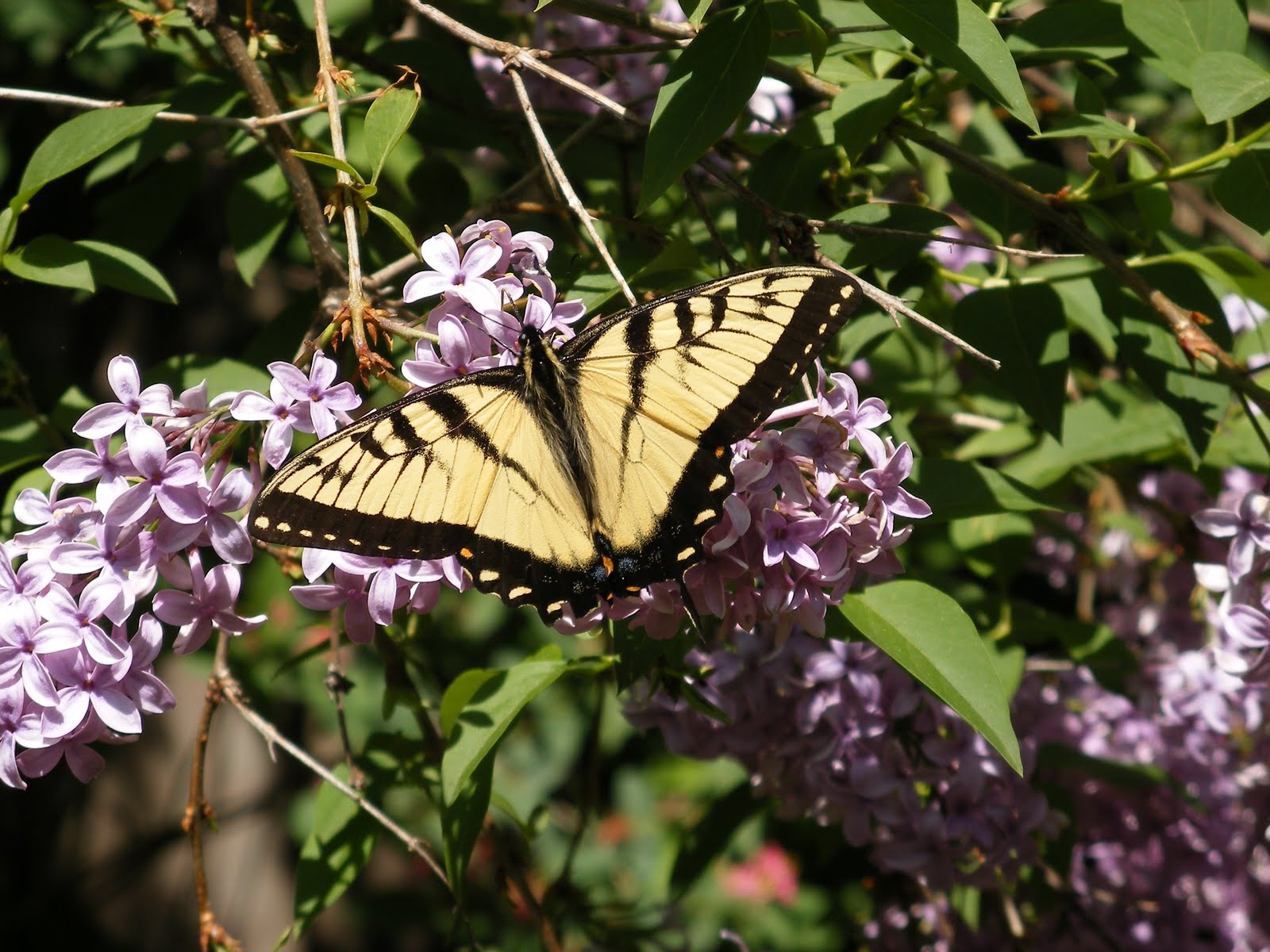
I'm thankful for the few butterflies we had this year, and that my garden could offer them some food and respite, even if only for a moment.


I'm thankful for garden buddies who provide blogalong passalongs.


I'm thankful for botanical oddities that keep me guessing...


...peppers that did the best they could in adverse conditions...


...and plants that remind me to pay attention to them, even when they're relegated to a less-than-perfect spot and deserve better.


I'm thankful for the rewards that gardening provides...


...and the continual promise of more beauty to come, year in and year out.


Most of all I'm thankful for you, dear readers, because without you I'd just be talking to myself! Happy Thanksgiving!

Tuesday, November 17, 2009

Book Review: Flora Mirabilis


I had the chance to review a copy of Flora Mirabilis: How Plants Have Shaped World Knowledge, Health, Wealth, and Beauty, a collaboration between National Geographic and the Missouri Botanical Garden written by Catherine Herbert Howell. While there are a number of reasons to read this book, notably its plant profiles and resplendent illustrations, the foremost is its focus on the significance of plants to human civilization.

Flora Mirabilis summarizes the use of plants through history, from the domestication of cereal crops thousands of years ago to the modern utility of rubber and cacao. It explains how people have employed plants medicinally, gastronomically, economically, and culturally, and this book highlights 27 particularly important plants, such as wheat, rice, cotton, and orchids. With intellectual yet readable prose, Howell describes how plants drove the age of discovery and sustained international trade long before "globalization" was a household term. For example, the desire for black pepper (the seeds of a vine) fueled Columbus's voyage, and sugarcane maintained the triangular trade of sugar, rum, and slaves between the New and Old Worlds. The terrible consequences of such botanical commerce are not overlooked, and neither are the social changes engendered by the spread of plants now consumed worldwide, including potatoes, tobacco, and coffee.

Howell focuses most of the book on the pre-modern era and moves fairly quickly through the last two centuries. This is understandable, as synthetics have increasingly replaced the original botanical sources of food and medicine, but it changes the pace and focus of the narrative. Conservation, ethnobotany, and the cut flower industry become the emphasis of later chapters. However, the evolution of botanical illustration is an additional subplot woven throughout the book. It not only complements the beautiful illustrations but also rounds out the rich history of humans' relationships with plants, which was much more intimate and complex before the Industrial Revolution.

I have been gardening since childhood, but my true passion (and educational background) is history; therefore, this book spoke to my two favorite interests. It is not a traditional gardening book or a how-to, and it may not appeal equally to those less enamored with the study of history. But if you enjoy exploring the ways we use, periodically abuse, and interact with members of the plant kingdom, then Flora Mirabilis will be intellectually invigorating and visually stimulating.

This book is, as they say, "available wherever books are sold." Happy reading!

Dear FTC: I was provided a free download of a pdf version of Flora Mirabilis. I did not receive any other compensation, nor was I directed/asked/cajoled to provide a favorable opinion. I am a subscriber to National Geographic, but that is paid for with my own hard-earned cash. Thank you.

Tuesday, November 10, 2009

Love for the Houseplants

For much of the year, houseplants are second-class citizens. They're shuffled around, moved outside for their allotment of fresh air and sunshine (like convicts in a prison yard), or, if left inside, they're overshadowed by the sexier outdoor garden which commands attention with its changing colors, peaking perennials, and vegetable harvests.

In my house they are even crowded on poorly lit window ledges to make room for our Christmas tree because the only location that can accommodate the tree happens to be the best window for the plants. So which member of the plant kingdom gets priority? The dead conifer, of course!


(The houseplant classic: spider plants!)

But when the garden enters hibernation and the Christmas tree is being ground into wood chips, it's the houseplants that are still colorful, still verdant, still recharging me by bringing life and lushness to the surroundings. So it's time I show the houseplants some love. That doesn't necessarily mean pampering because most houseplants are unfussy to begin with (especially mine or else they'll die quickly). What they really need is some interested attention.


(Night-blooming cereus with overwintering coleus and my aloe in the background.)

In the months of low daylight, abundant water and fertilizer will only confuse or even damage houseplants by contradicting their natural tendency to slow their growth. Houseplants are tender perennials and they respond to seasonal changes just like their outdoor brethren. Rather than flood them or push them into artificial growth spurts, it's best to monitor houseplants and water them thoroughly only when they're certifiably dry. If you stick you finger into the dirt and it's dry to your first knuckle, it's time to water. Let the water soak through until it's pooling in the tray (you've gotta have trays and pots with drainage!). Then let the plant be until it passes the dryness test again.


(The largest of my three purple passion plants, with my Christmas cactus. Pardon those dead leaves.)

That time period varies, however, since heat in our houses can cause houseplants to dry out faster than during the summer months. That's why these plants need attention--are they remaining moist in a dim corner, or are they baking near a heat vent? Either way they'll probably survive as long as you're aware of their conditions and take appropriate steps to care for them.


(Tillandsias, my new favorite plants. I run these under the faucet once every week or two, but that's another post)

A great way to know if your houseplants are happy is simply to touch them. Do they feel floppy? You're probably overwatering. Crispy? They're likely dried out. If the leaves of your jade plant are mushy then it needs water. If the Christmas cactus is drooping, give it more light and less water. None of this is hardcore botany, just a careful eye and caring touch. Just show them some love!

You May Also Like

Related Posts with Thumbnails