Showing posts with label purple hyssop. Show all posts

Monday, October 20, 2014

Fall Clean-up: The Annual Debate

I am of the gardening school of thought that advocates leaving spent perennial foliage through the winter and cutting it back in the early spring. There are number of reasons for this—providing food and shelter for birds and other wildlife, maintaining some color in the garden once flowers are done blooming, having a landing place for snowflakes as well as brown matter to contrast with those snowflakes, in the hope of achieving that elusive "winter interest" in the garden, etc.

Joe-Pye weed (Eupatorium maculatum) seedheads stand 6' tall...when dusted in snow they exemplify "winter interest"
Personally, I have rarely seen birds eating the seeds of my spent plants, although in late summer the goldfinches were feasting on purple hyssop seeds. But I also get the sense that old foliage protects plants through the winter, maybe helping to prevent frost heave and shielding the plant from freeze/thaw cycles. I don't know, it's just a hunch.
'Purple Emperor' sedums with prairie dropseed (Sporobolus heterolepis) photobombing

However, all those good reasons/intentions do not supersede the reality of dealing with straight-up ugliness in my garden. Essentially, if spent foliage just looks awful, I'm getting rid of it in the fall. Yes, it will all look awful by February, but if it's sad and dilapidated in October there's no chance I want to keep looking at it as it gets soaked, frozen, and increasingly beat down by winter.
Purple hyssop (Agastache foeniculum) with vine-whose-name-I-can't-remember look good in fall and so get to stay

So today I cut back some barren sticks that used to be purple hyssop (I think the finches were done with them, guessing by the looks of them), some flopping stems of brown-eyed susans, and nameless hostas. 'Halcyon', 'Touch of Class' and 'June' all look good, or at least they're on the spectrum between not terrible and still got it. The nameless ones were riddled with holes and yellowing, but not in a good-festive-fallish way. They were feeding nothing but any slugs still lurking around.


'Halcyon' still hanging in there


Am I prioritizing good looks over ecological utility? Maybe so, but overall there are still plenty of food sources, shelter materials, root protectors, etc., still left in my garden. Plus, is it really a bad think to cut back monarda and peony foliage swamped with powdery mildew? Doubtful. Mildew will always be in the soil here, but letting more knowingly incubate under the fall blanket of leaves seems unwise. It's a debate each year about what stays and what goes!
Zizia aurea (left) and Coreopsis tripteris (right)

Monday, August 23, 2010

What I learned on my summer vacation...

It's hard to believe that summer is nearly over, and the consistently warm and sunny weather belies what the calendar is telling me. The growing season still has another good seven weeks or so before we can expect a true frost, but as we turn into the home stretch I'm inclined to look back on this whirlwind summer and what lessons it's imparted.


1. It's the mulch, stupid!
This is rather embarrassing to admit, but I didn't mulch the vegetable bed this year and that was a major oversight! As someone who uses mulch quasi-religiously on the ornamental beds, and who has recommended the use of said mulch in multiple magazine articles, I really dropped the ball here! The lack of mulch contributed to tomato cracking and blossom end rot on some bell peppers, since the moisture level fluctuated rather wildly thanks to my frequent trips out of town and our periodic drought conditions. I guess I fooled myself into thinking mulch would be unnecessary and/or cumbersome because the bed is so small. However, I got a great suggestion from Garden Girl in a comment on a previous post about using leaf mold as a mulch, and I intend to give it a try next year.

2. Grow more hot peppers.

I have been scalding myself on a regular basis, and judging by the looks of these chili peppers it's set to continue. The habaneros are coming along beautifully too. I can't guarantee that next year will have the hot, sunny weather that this year has had, which is perfect for these peppers, but it's certainly worth another try!

3. Abject neglect will kill a container garden.
Before my week-and-a-half excursion away from home:


After:

The 'Diamond Frost' euphorbia is making a valiant effort to keep this container going, but the 'Ready to Wear' calibrachoa from Hort Couture and the 'Red Plume' celosia just couldn't handle the abuse.

4. Abject neglect will not necessarily kill a container garden.

This pot is in the shade, which undoubtedly helped its survival while I was gone. It's simple but I've been enjoying this container all season. Look at the nice crinkly texture of the 'Blackberry Waffle' hemigraphis, also from Hort Couture.


5. Abject neglect will kill a tree.
No photos of this involuntary arboricide. Let's just leave it at this: I bought a darling dwarf Canadian hemlock 'Pendula' that I was nursing along in a container with the intention of planting it in my problematic north border this fall. But I let it get too dry (I think), then I tried to overcompensate with too much water (I think), but I couldn't stop the downward spiral. I'm still not quite sure exactly how it happened, but I have officially killed a tree. Dark days.

6. Squashes need tons of sun.

I have gotten a whopping three cucumbers this year, and my four varieties of squash have produced exactly zero. The lush foliar growth and abundant flowers tells me there is hope for squashes here, but more sun would probably be a good idea. I expect to move the trellis next year, plant solely vining varieties to maximize sunlight exposure, and just generally lay out the veggie bed better next year.

7. Phlox paniculata and purple hyssop make a great combo.

OK, so I don't actually have many pictures of this combo because I mostly observed it in the frenzied weeks of late as I ran from the front door to the car, and later jumped from the car and ran back to the house, thinking as I streamed past the front garden, "Wow, those really look nice. Maybe I should take a picture. Maybe I should get more of them..." and then a thousand other things happened before I actually got the camera. But trust me, these 'David' phloxes and the hyssop (Agastache foeniculum) have anchored the front border since late July, and I like the textural contrast between the spiky hyssops and rounded, delicate phloxes.


So what did you learn this summer? Was it a good summer vacation, or are you ready for fall?

FTC Disclaimer: I got the calibrachoa and hemigraphis complimentary from Hort Couture, but as you should be able to see from this post, I am not predisposed to solely praise them.

Tuesday, August 3, 2010

Here come habaneros...


...among other scalding selections in the container 'o fire. The bell and sweet peppers are putting out fruit, and my tomatoes have produced vigorously but...


...inconsistent moisture and my shoddy watering have resulted in lots of cracking problems! As a relatively inexperienced tomato grower, I reached out to two sources of garden wisdom: my local extension office and my mother. I found out that as long as no infestation gets into the cracks, the tomatoes are still edible (extension office), and if I pick the tomatoes and let them ripen in the relatively infestation-free house, there is a better chance they'll make it to maturity (mother).


The Cherokee Purple tomatoes are coming in first in the race to ripen, and I just hope enough of these, as well as the Amish Paste and Black Krim, can be salvaged. Of course, most of these will probably ripen this weekend while we are out of town. Luckily they will not go to waste because my mom (the same source of tomato wisdom) will be checking on and watering the garden in our absence, and in return she has exclusive rights to any ripe tomato!


The plants are still putting out more fruit, and I will try to be more diligent about maintaining consistent moisture in the raised bed. One lesson I've learned so far this year: vegetables take much more water than I anticipated!

But just as I was moping about the tomato cracks and sullenly harvesting the affected fruits, I saw something that made me ecstatic to be growing vegetables and which inspired that jolt of satisfaction only gardening can provide...

...I have cucumbers!! All year I've wrangled with my squash-less squashes and cucumber-less cucumbers. But I think I've isolated the issue: not enough sun in the back of the bed. The fact that this cucumber (and its lone companion) are in a very sunny site, far from the trellis where they're meant to be, sort of confirms my suspicions.


In other happenings, 'David' phloxes and purple hyssop (Agastache foeniculum) have made a dynamic duo this summer, and I am planning to add more of both next spring.


The Joe-Pye weed (Eupatorium maculatum) is flopping because of the recent rains, but some visitors don't seem to mind.


In the shady part of the front garden, big-leaved aster (Eurybia macrophylla) is in full bloom and playing nice with new elm-leaved goldenrod (Solidago ulmifolia) that just might bloom this year, and the coleus.


And my new 'Touch of Class' hosta is sending up tentative flower scapes...I'm so happy it's happy enough to be flowering! I look forward to this beauty getting even bigger and better.


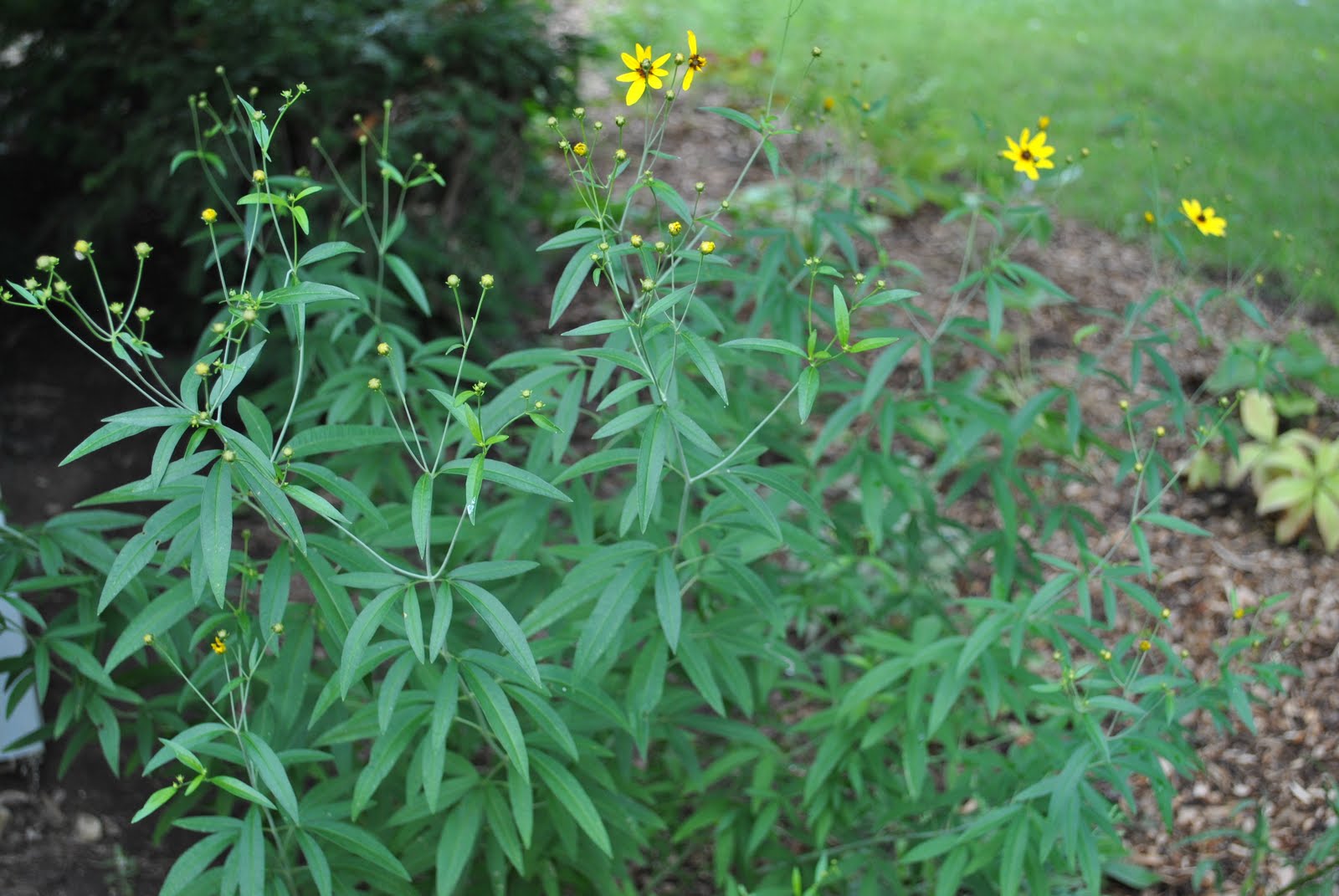
The tall coreopsis (C. tripteris) is late blooming this year; I hope it can save some flowers for when I'm back!


I only planted two containers this year, and I'm happy with my decision to go for quality not quantity. This mixture 'Diamond Frost' euphorbia, 'Red Plume' celosia and 'Ready to Wear Paris' calibrachoa (which was a complementary trial from Hort Couture) has held up beautifully through heat, dryness and humidity (albeit with regular watering).

Yet again I will be missing Bloom Day on August 15th, but I look forward to seeing what everyone else has in their gardens! I guess this is my pseudo-Bloom Day post!

You May Also Like

Related Posts with Thumbnails